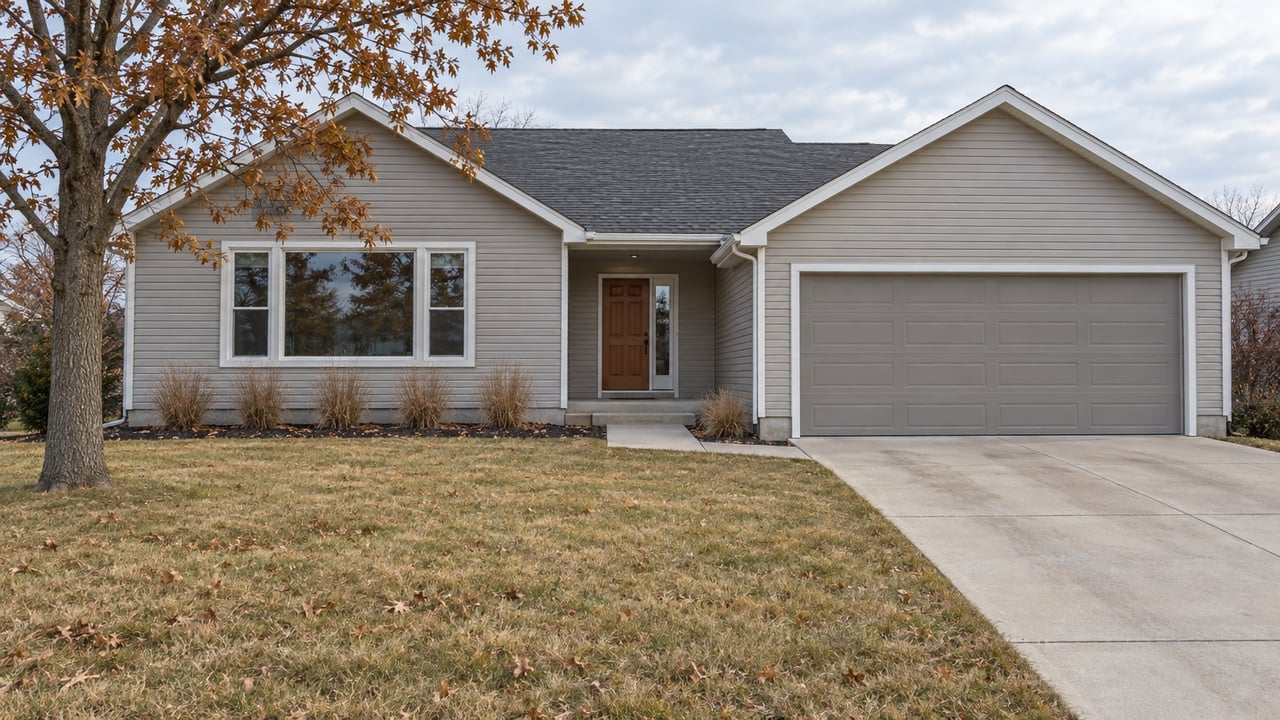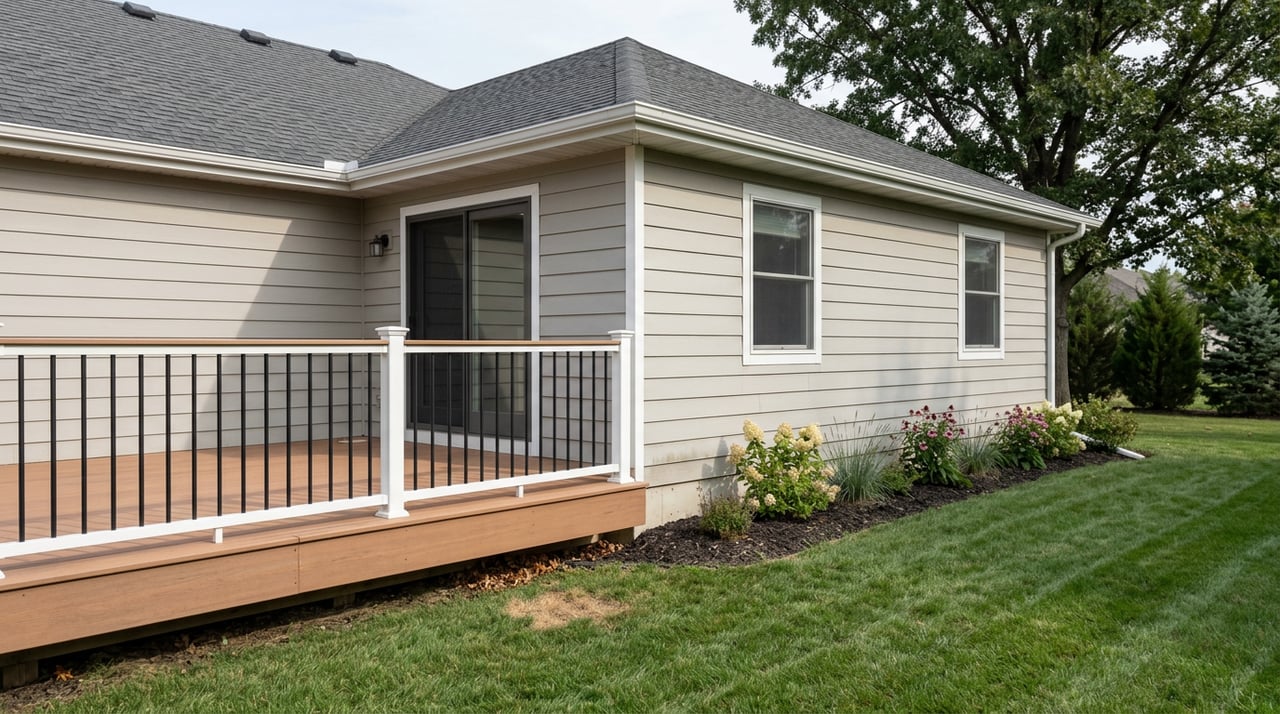
Pull the median sale price in Ethan and you get a number that looks reassuring. Public estimates put the town's typical home value around $268,900 as of mid-2026, meaningfully higher than Mitchell's $234,700, Parkston's $202,500, or Mount Vernon's $258,300. On paper, that says an Ethan seller has the strongest hand in the corridor.
The paper is misleading. Ethan is a 363-person town in Davison County, and the number of arm's-length residential sales inside the town limits in any given year can be counted on one hand. That's the pricing problem sellers rarely see until it costs them a week of momentum: the median is real, but the comp set an appraiser will use to defend it is not there. Your buyer's lender is going to have to reach outside Ethan to write a report, and the moment they do, that reassuring number stops mattering.
This post is about the two levers that actually decide whether an Ethan listing closes at contract price: the comps the appraiser will pull, and the disclosure clock you start when you hand a buyer paperwork. Everything else is downstream.
What the Corridor Medians Really Say
Here is the interpretive frame that matters, using the estimated typical home values published for the corridor mid-2026:
| Town | Estimated typical home value | Approx. population |
|---|---|---|
| Ethan | $268,900 | 363 |
| Mount Vernon | $258,300 | 463 |
| Mitchell | $234,700 | ~15,600 |
| Parkston | $202,500 | ~1,500 |
Ethan sits at the top of that list, but Ethan also has the fewest transactions to support it. That combination is where sellers get hurt. When there aren't enough recent in-town sales to write a full appraisal, the appraiser reaches for the nearest defensible set. In this corridor, that usually means Mitchell, occasionally Mount Vernon or Parkston, adjusted for lot size, outbuildings, and year built.
The mechanism is straightforward. If the appraiser's expanded comp set skews toward Mitchell's $234,700 typical value, the report will drift toward that number, not toward the Ethan headline. Adjustments help, but adjustments have limits, and most conventional lenders will lean on an appraiser who is stretching.
Working Backward From the Appraisal
The move a seller can actually make in Ethan is to build the comp file the appraiser is going to build anyway, and to do it before the listing goes live.
If you can hand your agent a defensible list of five recent Ethan-adjacent sales that support your price, you haven't influenced the appraiser. You've saved them the drive.
That work happens inside the REALTOR® Association of the Sioux Empire MLS, which is the feed that powers regional buyer traffic and the source most appraisers in the corridor default to. A seller who lists without that file has effectively delegated pricing to whichever three sales the appraiser stumbles on first.
Two practical implications follow. First, condition-driven premiums (a newer roof, a finished basement, a detached shop) need to be documented in listing remarks and photos in a way an appraiser can adjust for, not just described in a way a buyer will find charming. Second, if the price is going to stretch above what Mitchell comps alone would support, the seller should be prepared for an appraisal gap conversation the moment the offer comes in. That conversation is far easier to have in advance than during the option period.
The Disclosure Clock Sellers Reset By Accident
South Dakota's disclosure statute is codified at SDCL § 43-4-38, and it does something most sellers don't realize until it's too late: it puts a rescission clock in the buyer's hand every time the seller delivers a disclosure statement or a material amendment to one.
Under § 43-4-39, a buyer who receives the disclosure statement or an amendment after making a written offer has three days to terminate if delivery was in person, and six days if delivery was by mail. That right resets any time the seller learns of a new condition and issues an amendment. In a thin market where inspection findings often surface a repair the seller genuinely didn't know about, an honest amendment can hand a wavering buyer a fresh out.
The practical seller move is to deliver the completed disclosure statement before an offer is written, not after. The statute is explicit that the form is meant to be furnished before the buyer makes a written offer, and delivering it late is what triggers the termination window in the first place.
A shorter version of the same rule, in order of operations:
- Complete the disclosure statement before the property goes live.
- Provide it to every serious prospect before they draft an offer.
- If new information surfaces during the deal, amend in writing immediately, understanding that the amendment restarts the three-day (or six-day mailed) window.
- Document the delivery date. That date is the citation your closing file will need.
What the Form Actually Asks
The South Dakota Department of Labor and Regulation publishes the standardized Seller's Property Condition Disclosure Statement, most recently updated in July 2025. It runs more than 100 questions across four broad sections:
- Lot or title information: boundary surveys, easements, liens, encroachments.
- Structural information: foundation, roof, additions, prior repairs.
- Systems and utilities: plumbing, electrical, HVAC, well and septic where applicable.
- Hazardous conditions: known tests, radon, prior flooding, storage tanks.
The form also includes a catchall asking whether the seller is aware of any other material facts not addressed elsewhere. That catchall is where sellers get themselves in trouble. Under § 43-4-42, a misrepresentation or omission exposes the seller to actual damages, repair costs, and potentially the buyer's attorney fees. Under § 43-4-40, a truthful and complete disclosure functions as a liability shield.
The incentive structure is unusually clean for a real estate statute: over-disclose in writing, attach explanations where the answer needs context, and the law will protect you. Hide a known issue and hope the inspection misses it, and the statute is designed to find you.
Inspection Scheduling Is the Real Bottleneck
South Dakota licenses roughly 60 home inspectors statewide, regulated through the South Dakota Real Estate Commission. In a corridor served out of Mitchell and Sioux Falls, that means inspection availability is rarely the problem. Inspection scheduling is.
A buyer's option period in an Ethan deal frequently gets tight not because inspectors are scarce, but because the buyer waits three or four days after mutual acceptance to book one, then loses another two days waiting on the report. Sellers who want a clean deal timeline can pre-arrange a general inspection window with their agent before listing, so the buyer's side can plug into a known-good calendar rather than start from zero.
The Closing Runs Through a Title Company
South Dakota residential closings are ordinarily handled by a title company rather than an attorney. The title company runs escrow, orders the search, issues the policy, prepares the deed for recording, and disburses funds. Sellers typically receive net proceeds by wire within 24 to 48 hours after recording.
Two things follow for sellers. First, any title question that can be resolved pre-listing (a lingering mechanic's lien, a boundary line that never made it onto record, a missing spouse signature on a prior deed) should be. The title company will find it eventually; the only question is whether it finds it in week one of a listing or week six of a contract. Second, the wire timeline means sellers who are buying their next home in the same corridor need to coordinate closings carefully, because the proceeds are not sitting in an account the morning of closing.
A Pre-List Sequence for an Ethan Home
Working backward from what actually controls the deal:
- Build the corridor comp file first. Five recent sales in Ethan, Mount Vernon, and the north edge of Mitchell that defend the target price. This is the appraiser's homework, and doing it first sets a defensible list price.
- Complete the disclosure statement early. Fill out the DLR form in draft, then walk the house against it. Attach explanatory pages where any answer needs context.
- Clear the title questions. Ask the title company to run a preliminary search before listing rather than after acceptance.
- Prearrange the inspection window. Give the buyer's agent a short list of inspector availability so the option period doesn't stretch on scheduling alone.
- Photograph and remark for the appraiser, not just the buyer. Roof age, mechanical replacements, and outbuilding square footage belong in the listing record, not only in conversation.
Do those five things before the sign goes in the yard and the two hidden levers, the comp problem and the disclosure clock, stop being risks. They become tools.
FAQ
Do I have to use the DLR form, or can I write my own disclosure? The DLR-issued Seller's Property Condition Disclosure Statement mirrors the statutory language in SDCL § 43-4-44 and is the version buyers, agents, and title companies expect. Using it removes an unnecessary variable.
Can a buyer waive the disclosure? South Dakota law contemplates limited exemptions (new construction, foreclosure transfers, transfers between co-owners, transfers via divorce or inheritance), but for a standard resale of a residential home in Ethan, plan on delivering the statement.
How long should I expect from list to close? In a thin-inventory small town, the appraisal and title timeline usually drives the calendar more than the marketing timeline. A cleanly prepared listing with the comp file, disclosure, and title work already done can move contract-to-close in the same window a Mitchell home would.
Selling in Ethan rewards preparation more than presentation. If you'd like a pre-list walkthrough that covers the comp file, the disclosure draft, and a title check before your home is priced, contact a local expert at Mitchell Realty and we'll build the sequence with you.