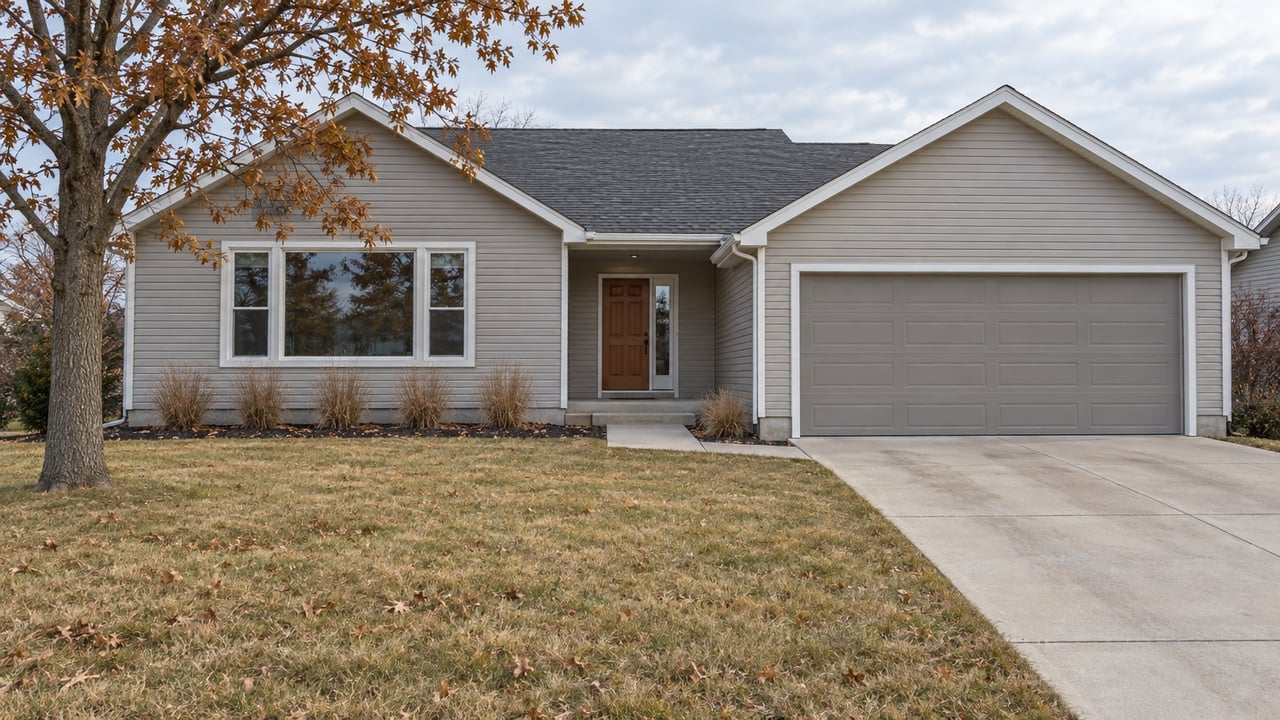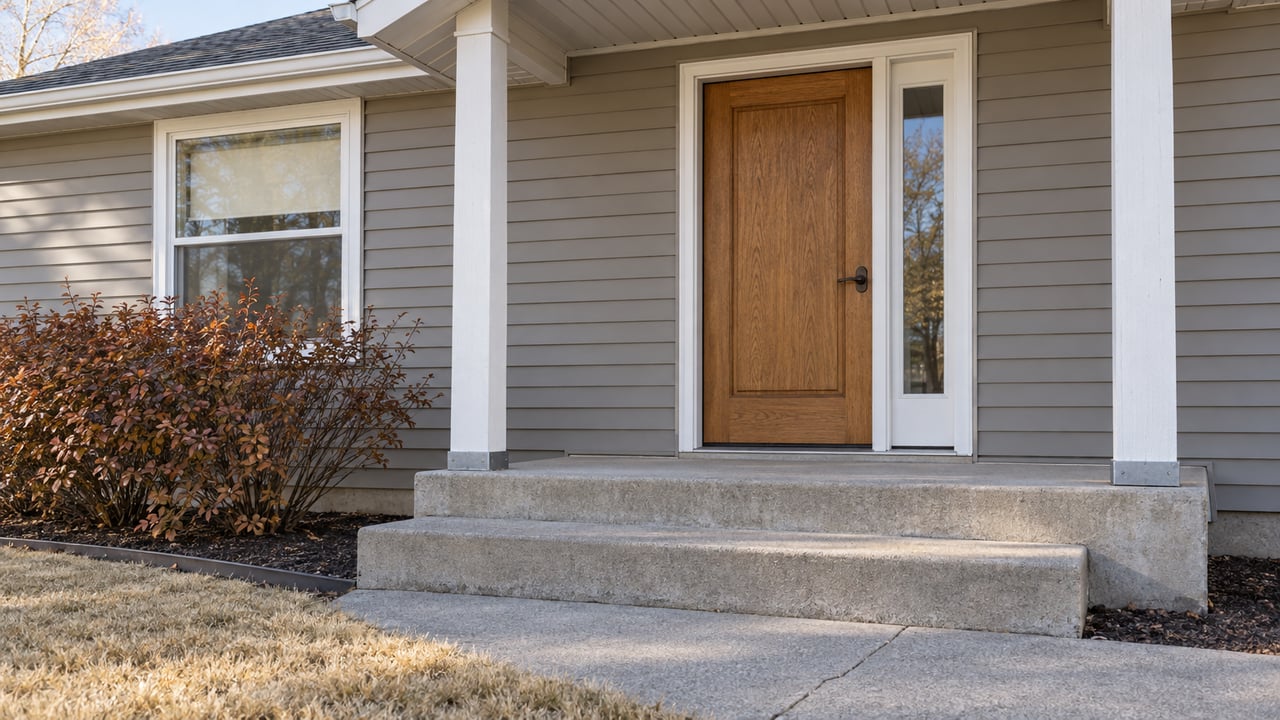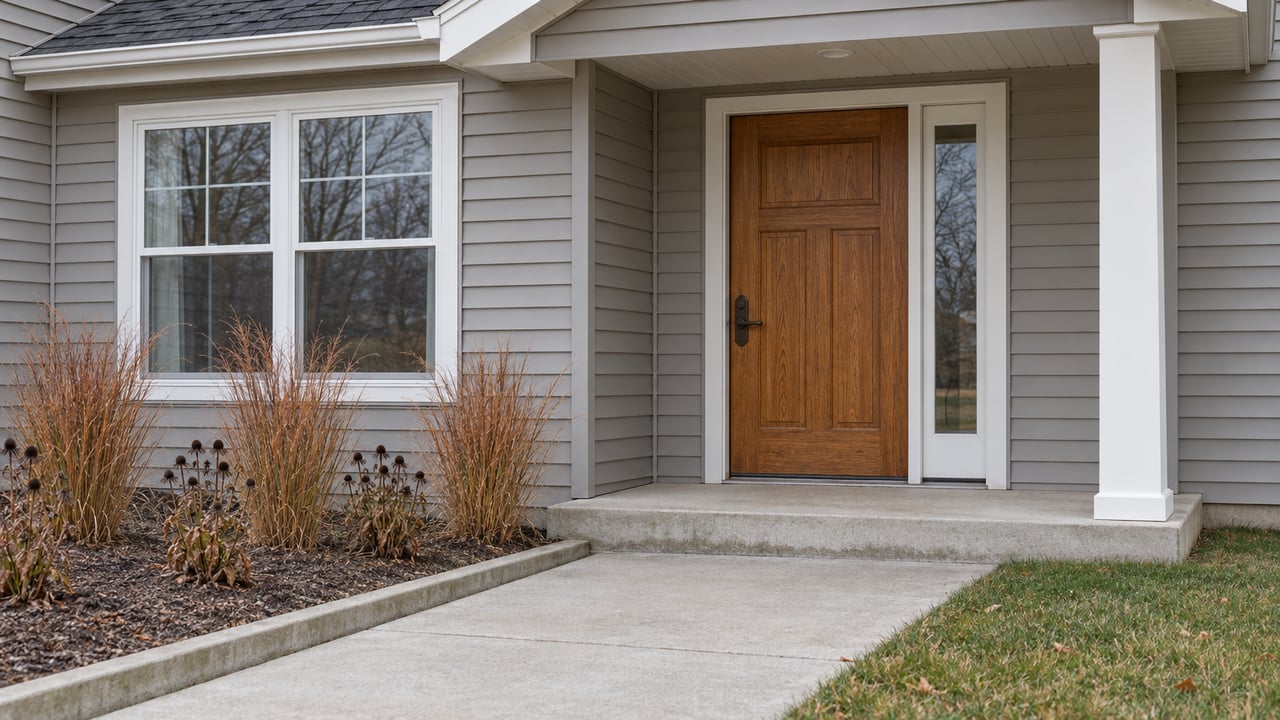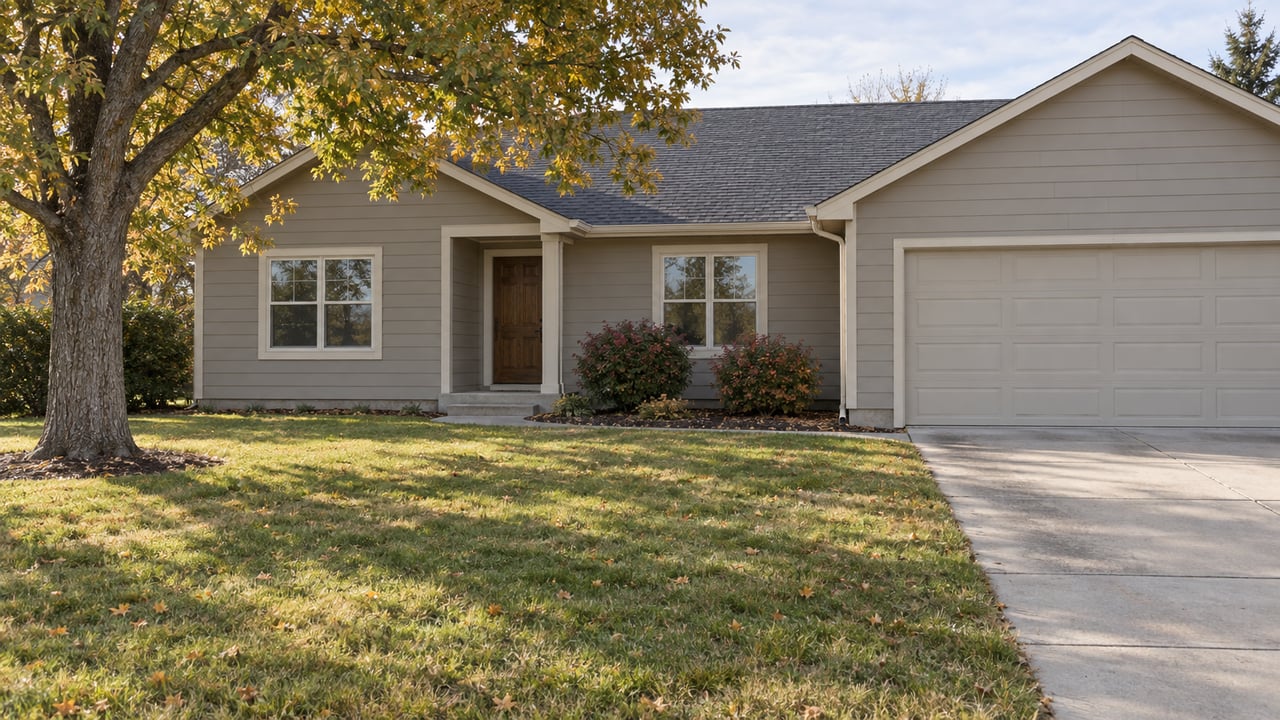
Four blocks from downtown Mount Vernon, a three-bedroom house on East 4th Avenue is listed at $80,000. It sits on a quiet, tree-lined street, needs updating, and shares a zip code with a property nine miles out on 253rd Street that has been sitting on the market since May, asking $769,000 for four bedrooms and a barn-style layout on acreage. Both show up under "Mount Vernon, SD" on every portal that tracks the town. Nothing else about them matches.
That gap is not a fluke of two odd listings. It is the whole shape of the market right now, and it is worth understanding before you compare anything in Mount Vernon to a number you saw somewhere else.
Six Listings, and a Gap Nobody's Filling
As of mid-August 2026, Zillow showed six homes for sale in the Mount Vernon area. That is the entire visible inventory around a town of 461 people. Four of those six are currently listed by Mitchell Realty: an $80,000 fixer at 307 E 4th Ave, a $218,000 five-bedroom at 202 W 1st Ave, a $249,000 three-bedroom with a finished lower level at 511 N Lindman St, and a $495,000 two-bedroom, three-bath property at 24538 394th Ave sitting on 2,144 square feet.
Line up the six current listings by price and the split is not subtle. In-town properties on named streets, East 4th Avenue, West 1st Avenue, North Lindman Street, run from $80,000 to $249,000. Properties out in the surrounding countryside, addressed on numbered rural routes like 262nd Street, 394th Avenue, and 253rd Street, run from $475,000 to $769,000. Between $249,000 and $475,000, there is currently nothing listed at all. Not a thin patch of inventory. An actual gap, empty, in a market with only six houses to begin with.
Average those six prices together and you get a number that describes no house that actually exists. Take the median and you get whichever one happens to sit in the middle of an extremely short list that month. Either way, the summary statistic is doing work that six houses split into two unrelated groups cannot support.
The Address Already Told You Which Bucket You're In
South Dakota's rural addressing system draws the line for you before you even see a photo. Properties inside a platted town get named streets and avenues. Properties out in the township get numbered addresses tied to section roads, the 262nd Streets and 394th Avenues that show up on county road maps rather than town plats. In Mount Vernon's current inventory, that addressing convention maps almost perfectly onto the price split: named-street addresses cluster under $250,000, numbered-route addresses cluster above $475,000.
That is not a coincidence about house size. The $475,000 listing on 262nd Street has just 1,235 square feet, smaller than several of the in-town houses listed for a third of the price. What you are paying for out there is not square footage. It is acreage, distance from downtown, and whatever septic, well, or outbuilding infrastructure comes with a rural parcel rather than a platted city lot. Anyone comparing a Mount Vernon listing to "the town's median price" needs to know which of those two products they are actually looking at, because the number moves for entirely different reasons depending on the bucket.
If you want to confirm how a specific parcel is zoned or whether it sits inside city limits before you get further into a purchase, Davison County's Planning and Zoning Office can pull the file and map for any address in the county.
Why Mitchell's Median Actually Behaves Like a Median
Seven miles up the highway, Mitchell doesn't have this problem, because it doesn't have this small a sample. Homes.com counted 42 active listings and 188 homes sold in Mitchell over the trailing 12 months as of its most recent update. Redfin's snapshot for August 2026 put Mitchell's median sale price at $256,230, down 1.6% year over year, a small, ordinary move that is exactly what you'd expect from a market selling roughly 15 to 16 houses a month.
Compare that to Redfin's own market page for Mount Vernon, which lists a 5.7% average discount from list price and a 23-day median time on market, alongside a note that only one home sale is feeding those figures. A percentage built from one transaction describes that one closing and does not yet show a market trend. Mitchell's median earns the word "median" because enough transactions happen every month to smooth out any one house's quirks. Mount Vernon's doesn't, because it can't.
None of this makes Mount Vernon a bad place to buy. It means the tools built for reading a normal market, medians, averages, year-over-year percentages, don't tell you much when the entire dataset is six houses split into two groups. The information that actually helps is the specific address, the specific lot type, and what else has sold in that same bucket recently, not the town-wide summary a portal generates automatically.
What This Means If You're Comparing Mount Vernon to Mitchell
If you're looking at an in-town Mount Vernon listing, the honest comparison isn't to Mount Vernon's blended average. It's to Mitchell's deeper pool of similarly sized in-town homes, where a $256,230 median sale price as of August 2026 gives you a real benchmark built from a real sample. Every current in-town Mount Vernon listing, at $80,000 to $249,000, sits below that Mitchell median, though the comparison is thin on the Mount Vernon side simply because there are so few houses to compare.
If you're looking at one of the rural-fringe listings, the more useful comparison is to other acreage-adjacent properties in Davison County rather than to anything inside Mitchell's city limits, since you're buying land and distance as much as square footage. A property that has sat 91 or 124 days on market, as two of Mount Vernon's current rural listings have, is worth asking about directly. In a market this thin, a long time on market can mean the price hasn't found its buyer yet, or it can mean the property is simply waiting for the right acreage buyer to come along. Either way it's a conversation worth having before you anchor to the list price as if it reflects broad demand.
One Utility Question Worth Asking Before You Write an Offer
Public water system records list Mount Vernon's primary water source as purchased surface water rather than the town operating its own wells. That's a detail worth raising directly with the seller or the city rather than assuming it works the way it does in a larger town with its own municipal wellfield. Ask who the water provider is, how the rate structure works, and whether there are any capacity notes tied to the property, especially if you're looking at one of the rural-fringe listings where water and septic infrastructure is doing more of the work than city service ever will.
FAQ
Does Mount Vernon have a reliable median home price? Not one that behaves like Mitchell's. With only six active listings split into two unrelated price bands, in-town under $250,000 and rural-fringe above $475,000, any single median or average number is describing a gap, not a market.
Will the gap between the two price bands stay the same next year? Almost certainly not exactly. The current split, roughly $249,000 to $475,000 as of August 2026, reflects whichever six houses happened to be listed that month. New listings in either bucket will move the line. What tends to persist is the underlying split itself, in-town platted lots versus rural acreage-adjacent parcels, because that split is structural, tied to addressing and land type, not to which specific houses are for sale.
Is buying in-town in Mount Vernon cheaper than buying in Mitchell? Based on current listings, yes, on the surface. Every in-town Mount Vernon listing tops out at $249,000, below Mitchell's August 2026 median sale price of $256,230. The sample on the Mount Vernon side is small enough that this comparison should be treated as directional, not definitive.
If you're trying to figure out which bucket a specific Mount Vernon listing actually belongs to, or how it stacks up against what's currently moving in Mitchell, it helps to talk with someone who tracks both markets closely enough to tell the difference. Mitchell Realty LLC works both sides of that line every week and can walk you through what a given address is really telling you before you make an offer.