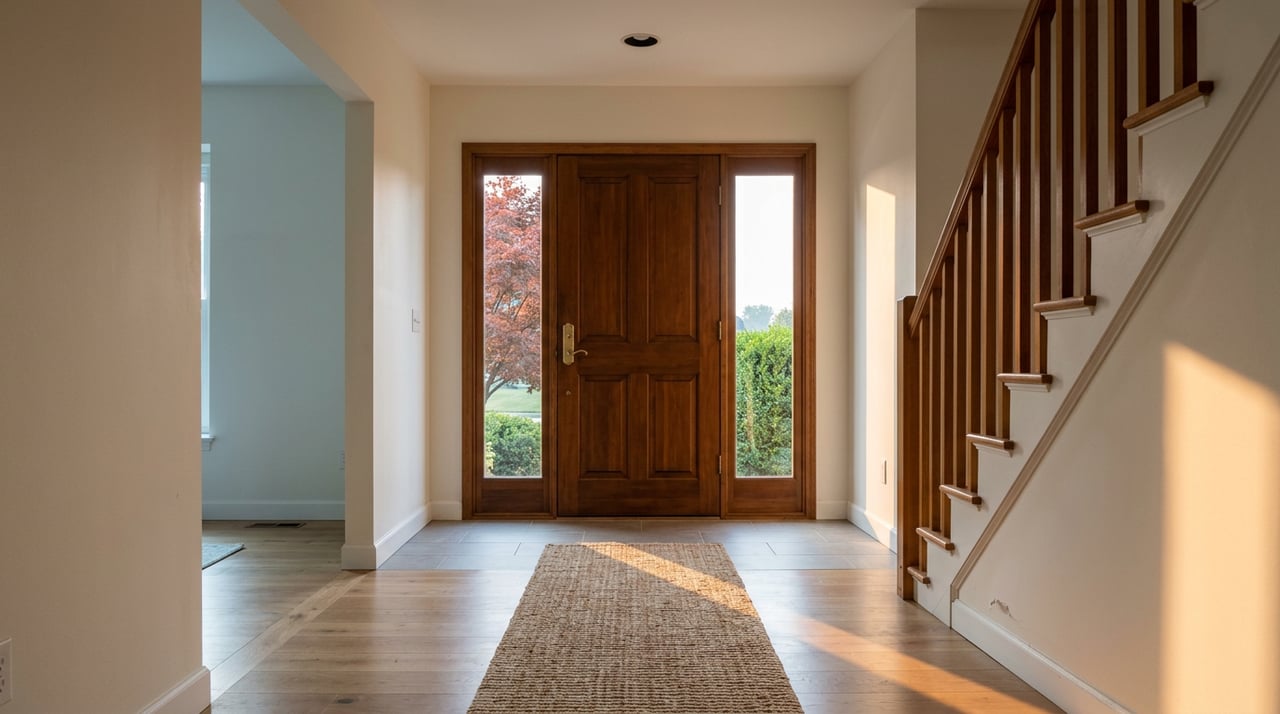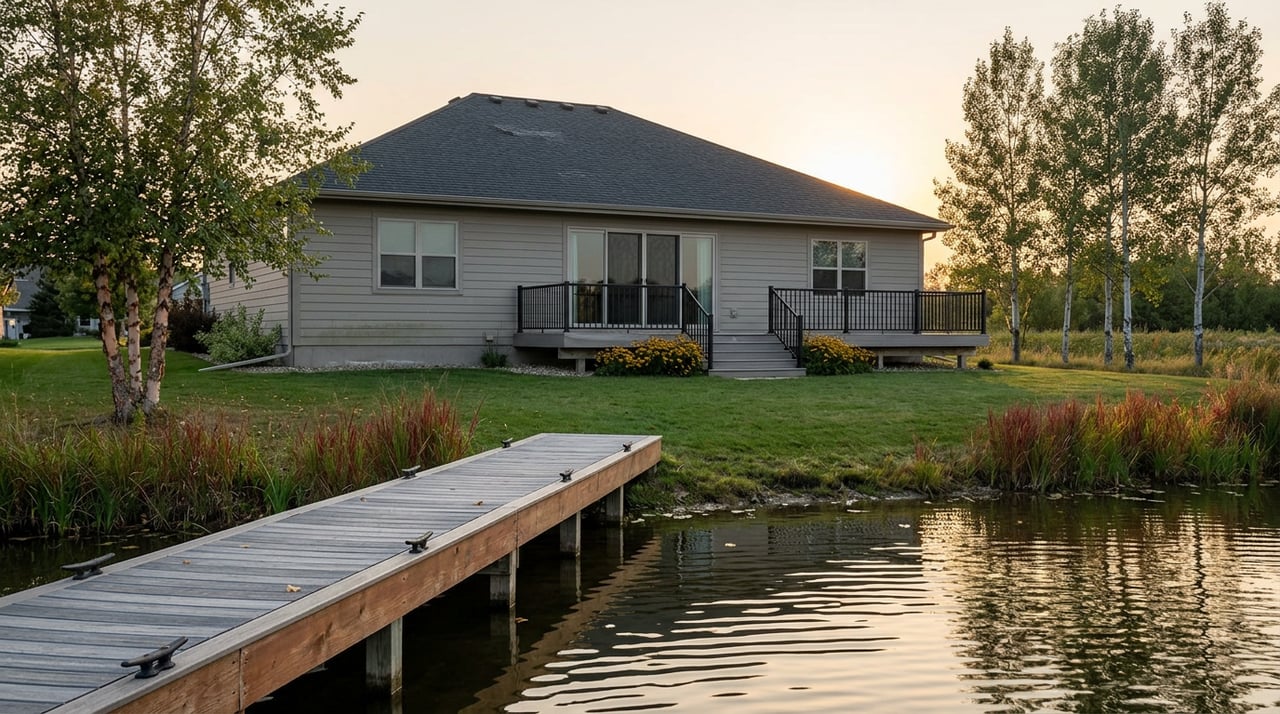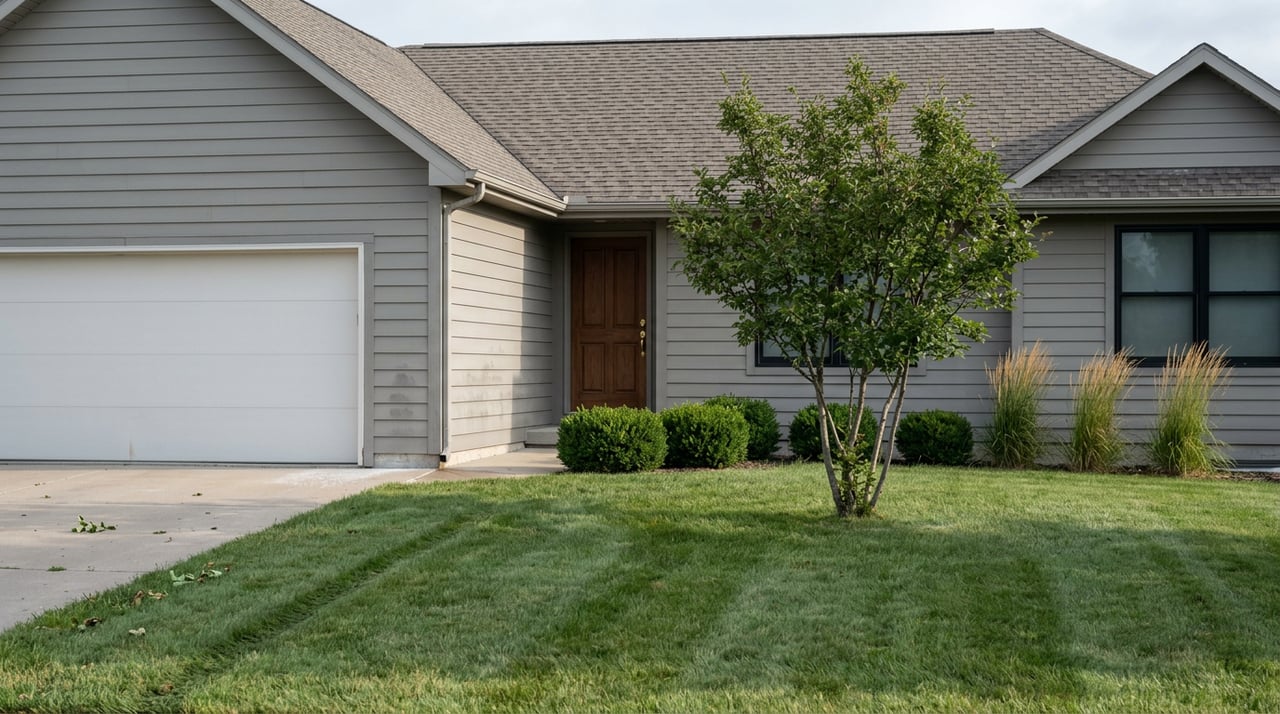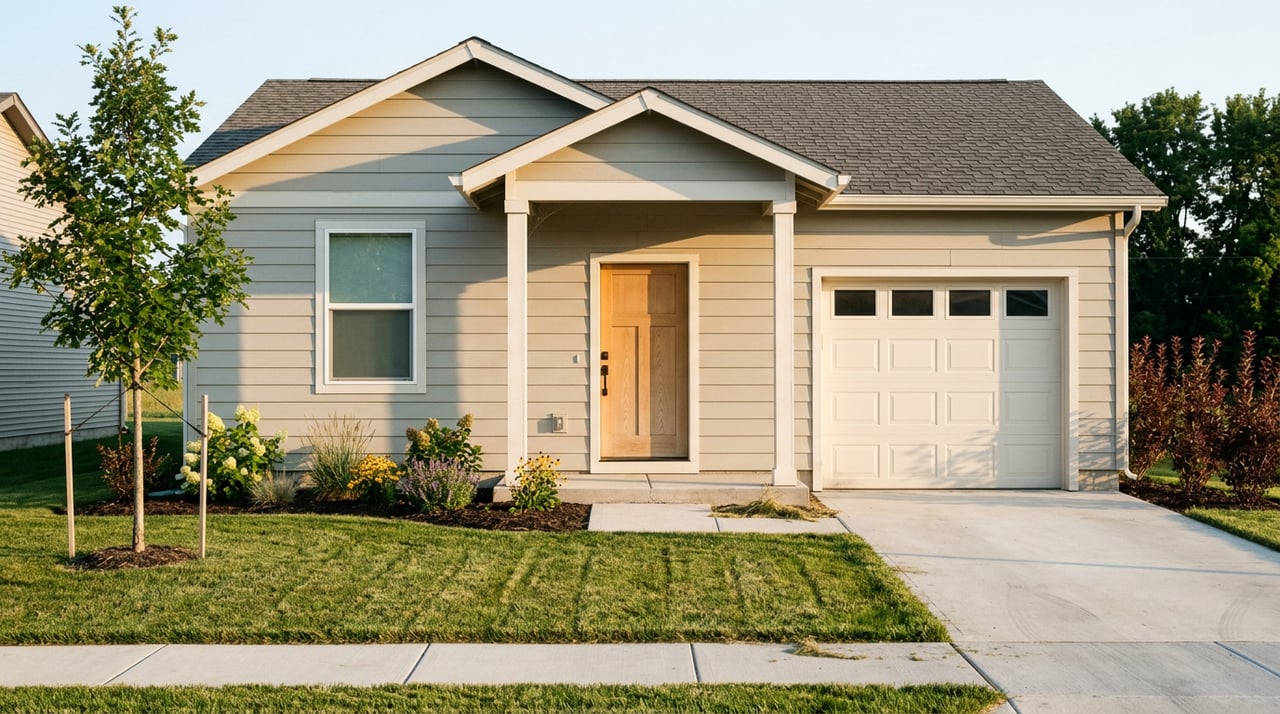
Picture two buyers closing on homes the same week this fall, both around $225,000, both financing at the same rate, both writing roughly the same monthly check to their lender. One buys an established three-bedroom on Mitchell's east side. The other buys new construction in Ridgeview on Foster, the workforce housing development taking shape northeast of Avera Queen of Peace. Their mortgage payments will look almost identical on paper.
Their property tax dollars will not behave the same way for the next two decades.
That difference has nothing to do with the mill levy rate stamped on either bill. It has to do with a financing tool called tax increment financing, and it is the reason a growing share of Mitchell's new-construction inventory exists at all. If you are shopping in one of these developments, the discount that made the lot affordable comes with a mechanism worth understanding before you write an offer, not after your first reassessment notice arrives.
Why the Lot Was Cheaper Than the Street Underneath It
Mitchell has two active examples of this worth knowing by name. The first is Ridgeview on Foster, built through a partnership between Avera Queen of Peace Hospital, which donated the land, the Mitchell Area Development Corporation, which holds it, and Mitchell Area Housing Inc., which is developing it with plans for up to 60 homes on the site. Students in Mitchell Technical College's Architectural Design and Building Construction program build the homes as part of their coursework. When the partnership marked its first completed placement in May 2025, organizers pointed to a labor market where jobs were plentiful and workers were not: Mitchell's unemployment rate was running near the lowest in South Dakota at the time, and housing was named as the bottleneck standing between open positions and people to fill them.
The second is the Airport Addition project, formally Tax Incremental District 27, a 26-lot subdivision where the developer borrowed $526,965 from American Bank & Trust of Stickney at 4.5 percent interest to cover site preparation, streets, curb, gutter and drainage, according to the city's own TID filing. Four lots were already built out at the time of that filing, with the remaining 22 planned for development through 2026.
Neither project pretends the infrastructure is free. Both use the same mechanism to pay for it: a Tax Incremental District captures the growth in property tax revenue generated inside its boundary, above a frozen base value, and routes that growth to the developer's infrastructure debt instead of the city's, county's or school district's general budget. In the TID 27 filing, that base was locked at 2022 assessed values, with taxes payable in 2023, and the district can keep capturing the increment for up to twenty years from creation. That puts the sunset somewhere in the early-to-mid 2040s depending on the exact creation date, which is longer than most people hold a starter home.
This is why the mechanism exists in the first place. As the Mitchell Area Chamber of Commerce put it when it launched its "Welcome to Your Palace" resident recruitment effort, the local housing projects backing it represent roughly $8 million in infrastructure spread across 100 workforce housing lots, money that would otherwise have to come from either the developer's own equity or a much higher lot price passed straight to the buyer.
"After working at Muth Electric for 40 years, I knew firsthand how much Mitchell was growing and how badly we needed more workforce housing. When I retired, I made it my mission to help solve that problem."
That's Terry Sabers, president of Mitchell Area Housing Inc., describing why the group exists. The TID isn't a subsidy handed to the buyer. It's a bridge loan the future homeowners of the district repay themselves, one property tax bill at a time, so the lots could be priced for the workers the city says it needs rather than for what raw infrastructure actually costs.
Where Your Marginal Tax Dollar Actually Goes
Here is the part a listing sheet will never show you. Buy an established home on Mitchell's east side and every dollar of property tax growth on that parcel flows through the normal channels: city, county, school district, each drawing its share according to the mill levy set every year. Buy inside an active TID and the growth above that frozen base value gets rerouted first. Your assessed value still rises. The same mill levy rate still gets applied to calculate what you owe. But the increment, the portion above the district's base, goes to retire the developer's infrastructure loan rather than to the same shared pool that funds schools and county services for your neighbors three blocks away.
Your total bill isn't necessarily higher for this. It's the destination that changes, not the math. But that destination matters more this year than it has in a long time, because South Dakota just changed the math everyone else is working with.
One Rate Cut, Two Different Experiences
South Dakota's 2026 legislative session passed Senate Bill 245, which permanently lowers the state's owner-occupied mill levy for K-12 education funding, with legislative estimates putting the reduction between 14 and 22 percent. That relief is funded in part by $55 million in redirected state reserve funds, alongside revenue that would otherwise have disappeared when a temporary sales tax discount expires on schedule. Lawmakers also passed Senate Bill 96, which lets counties add up to half a percent in local sales tax specifically to buy down mill levies further, and House Bill 1245, which authorizes a separate one percent county sales tax earmarked for capital projects rather than levy relief.
For a homeowner outside a TID, SB 245's cut lands on the whole assessed value of the home and flows straight through as lower taxes owed, no asterisk attached.
For a homeowner inside an active TID, the same lower rate applies to the calculation, but it's applied against a base value that was frozen years ago plus an increment that's already earmarked for debt service rather than the school levy that just got cut. In practical terms, a buyer in Ridgeview on Foster or Airport Addition is contributing to their own street and sewer line at the same rate their non-TID neighbor is now contributing less to Mitchell's schools. Neither buyer sees this on a closing statement. Both find out, eventually, when they start comparing tax bills at the block party.
What to Actually Ask Before You Write an Offer
None of this should scare a buyer away from a TID-financed lot. It should change what you ask before you sign.
- Confirm whether the specific parcel sits inside an active district, and ask the city's planning and zoning office, not the listing agent, for the creation date and remaining term.
- Ask what the base value was set at and how much the assessed value has already climbed since then, which tells you how much of your future bill is currently increment rather than base.
- Know that Davison County's homestead exemption for primary residences works the same regardless of TID status. That relief isn't affected by which side of the increment your home sits on.
- If you're planning to hold the home long enough to see the district sunset, ask what happens to the assessed value and mill levy distribution the year it does. The tax line item won't disappear. It just starts flowing to the general fund instead of the developer's note.
If Your Assessment Still Surprises You
Whether or not your home sits inside a TID, the path for challenging an assessment in Davison County follows the same statewide sequence, and it's worth knowing before you need it:
- The county mails assessment notices before March 1 each year.
- If you disagree with the value, the first appeal goes to your local board of equalization.
- An unresolved appeal moves up to the county board.
- Beyond that, appeals go to the state's Office of Hearing Examiners.
- The final step, rarely reached, is South Dakota circuit court.
That sequence, confirmed in reporting on the state's property tax reform task force, applies whether your parcel is a 1960s bungalow or a brand new build inside TID 27. TID status changes where your money goes. It doesn't change your right to challenge what the county says your home is worth.
FAQ
Does buying inside a TID affect my homestead exemption? No. The homestead exemption is based on the property being your primary residence, not on whether the parcel sits inside a tax increment district.
When does a TID like Airport Addition's actually expire? Up to twenty years from the district's creation. TID 27's base year was set at 2022 values, which puts its outer limit sometime in the early-to-mid 2040s, though it could close sooner if the infrastructure debt is repaid faster than scheduled.
Is Ridgeview on Foster still adding homes? As of the 2025 partnership announcement, the project had plans for up to 60 total homes, with construction continuing through Mitchell Technical College's building program.
Does SB 245's mill levy cut apply to homes inside an active TID? The lower rate applies to the calculation on the whole parcel. What changes is where the tax dollars generated by the increment portion are routed while the district remains active.
Buying new construction in Mitchell right now often means buying into a financing structure most other buyers never have to think about. Understanding it before you offer, not after your first full assessment cycle, is the difference between a pleasant surprise at resale and an unpleasant one. If you're weighing a lot in one of these developments against an established home across town, Mitchell Realty LLC can pull the specific TID boundary, creation date and base value for the parcel you're looking at before you write anything down. Contact a local expert and get the numbers that actually apply to your address.